GENIUS & CLARITY: When Regulation... Makes Sense?
Last Updated: 2025-07-24
I was cautiously optimistic about GENIUS and CLARITY, the first of which has already been signed into law. Between strong industry input, smart leadership, and battle scars from the reign of Gary the Terrible, it seems like the possibility for sensible legislation is at an all time high. I'm happy to say that, after studying them, I believe my optimism was well placed - GENIUS and CLARITY are good pieces of legislation and will solidify American dominance in crypto by laying out clear rules of the road and leave innovation unhindered.
Big Takeaways
To those looking for a maximally concise exec summary of the legislation, here are the biggest points in GENIUS & CLARITY:
GENIUS - deals with stablecoins (digital USD), of which the largest issuers are Tether & Circle.
- Requires stablecoin issuers to:
- Hold cash or short term treasuries to ensure that stablecoins are backed with high quality assets (currently firms like Tether hold a large variety of assets including commercial paper).
- Publish regular reports on their holdings and perform 3rd party audits once past $50bn in total issuance.
- Comply with oversight from the OCC and other state & bank regulators.
- Comply with AML & sanctions programs, meaning they must able to seize, freeze, or burn funds where directed.
- Passed with substantial bipartisan support (294-134 in the House, 68-30 in the Senate) and was signed into law on 2025-07-18.
- Primary winners: Circle (USDC), and other US-based stables
- Primary losers: not certain yet, but likely Tether given that they'll have to reorganize their balance sheet in order to comply. More on this later.
- Wildcard: Algorithmic/decentralized stablecoins like MakerDAO's DAI go largely unaddressed. These stables are classified as "non-payment" and largely fall outside the purview of this legislation.
CLARITY - deals with all other digital assets, whether an asset is a commodity or a security, and ICOs/token sales.
- A central challenge of cryptocurrencies is the ambiguity they bring to the commodity/security designation. This legislation aims to solve that via a couple mechanisms:
- Decentralization Maturity Test: a new framework (think a bit like the Howey Test) for determining if a digital asset can be classified as a commodity. More on this later.
- New regulatory categories: Digital Commodities Exchanges, Brokers, and Dealers now exist as explicit designations, and allow market participants to register solely with the CFTC where applicable.
- Default commodity designation for all of the currencies you'd expect: BTC, ETH, LTC, ADA, DOT, XTZ, DOGE (as all of these are decentralized and mature)
- Other cryptos will have to submit a petition to the SEC to switch from classification as a security to a commodity.
- ICOs/Token sales are securities offerings, but sales under $75m total are exempt from SEC registration and face lighter regulatory scrutiny.
- Tokenized real world assets (RWAs) - think REITs, gold, etc - are treated like their underlying assets. No double jeopardy.
- Passed the House with similar bipartisan support to GENIUS (294-134), and awaiting Senate review. Senate Banking Committee Chairman Tim Scott has stated that the bill should be complete before the end of this session (2025-09-30).
- Primary winners: Coinbase, Kraken, & other US based exchanges.
- Primary losers: Binance and other foreign exchanges.
- Wildcard: DeFi and P2P transactions are largely untouched by this legislation.
The Previous Regime
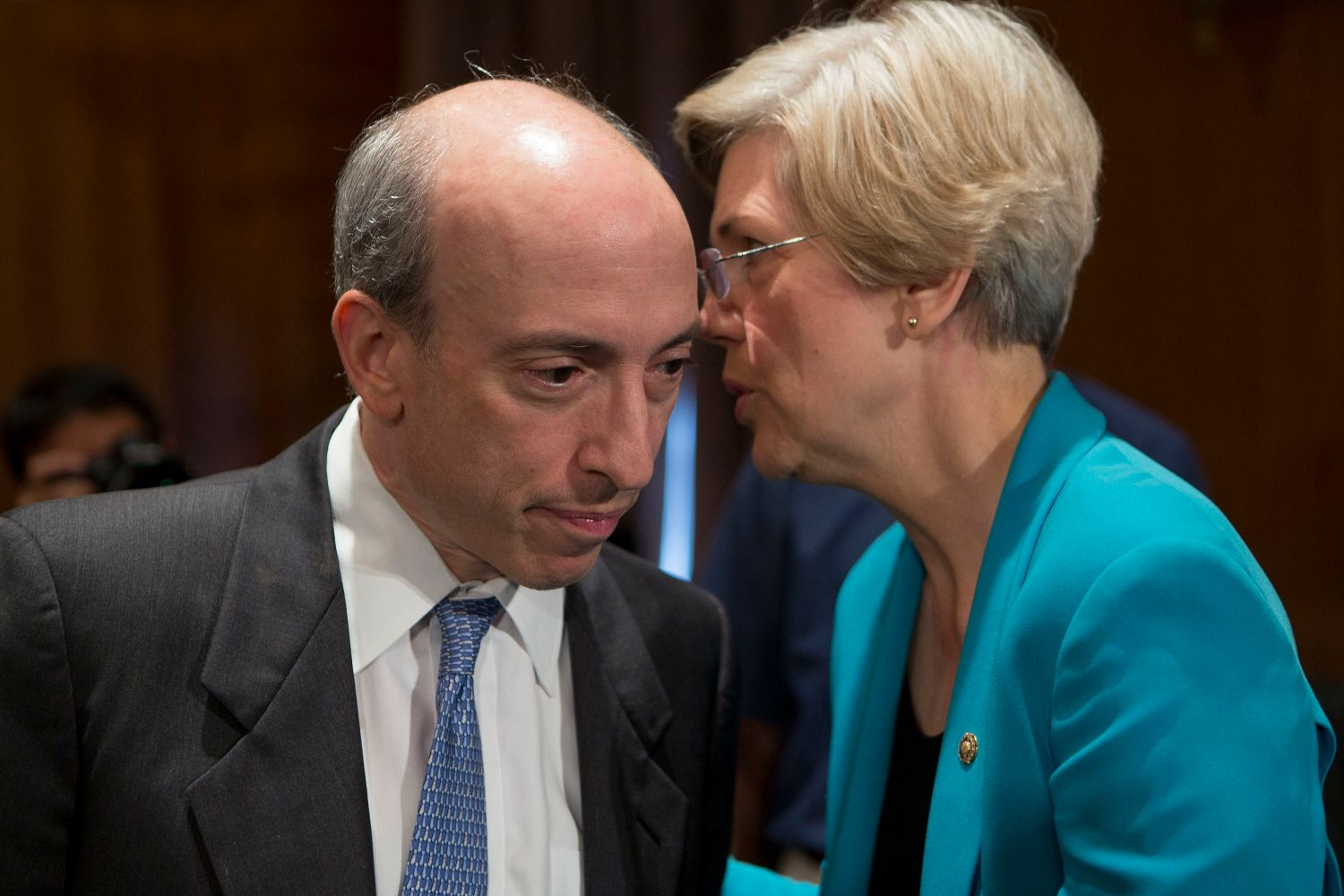
Arguably one of the biggest impacts of this legislation will be to protect the industry from future Terrible Gary wannabes and Pocahontas types. To provide context, until the Trump admin came into office, the paradigm was 'Regulation through Enforcement.' This meant that instead of explicitly outlining the rules that various market participants had to abide by, the SEC would randomly pursue any party it viewed as easy or politically advantageous prey with Wells notices and draining litigation. This is like sitting down at a blackjack table only to be told that sorry, your blackjack isn't valid, the new limit is 17, and the dealer has a gun so you better hand over the rest of your chips if you know what's good for you. If this sounds like highway robbery with more steps, that's because it is.
By providing a clear (and permissive) framework, the current admin has given US firms the protection they so desperately needed. Now market participants can go back to doing the important work of building the best technology and businesses in the world without fear that a changing of the guard will plunge them back into regulatory and legal uncertainty. This is exactly the point of good regulation - sure, it's probably a good thing to curtail long tail externalities that certain businesses might impose on the public - but the far more important role of good regulation is to curtail overzealous bureaucrats and politically litigious regulators.
The $160bn Elephant in the Room
GENIUS cannot be discussed fully without considering Tether, the largest issuer of stablecoins. As someone who has been working in crypto since 2017, I can confidently say that Tether has always been controversial and the subject of countless debates/contentious claims. One of the first stablecoins, it faced immediate ideological pushback - the fundamental premise of crypto was, after all, to exit the existing centralized monetary regime. Why would anyone want the dollar on chain?! From there, Tether has faced continual accusations of obfuscating its reserves and failing to provide transparency. There were entire pseudonymous twitter accounts dedicated to exposing Tether and their treachery. The fundamental question was always if Tether was fully backed (i.e. 1 dollar for each Tether in circulation). Various allegations circulated with some degree of regularity: Tether was issuing themselves unbacked tokens to purchase BTC at opportune times! Tether was borrowing to or lending from their sister exchange Bitfinex because one or another was insolvent! This culminated in a 2021 investigation by the New York AG which resulted in an $18m speeding ticket and an agreement to disclose some information about the reserve holdings. Tether still publishes these reports on a regular basis, and it's here that you can see the commercial paper, commodities, and "Other Investments" that make up a nontrivial portion of Tether's reserve holdings. Take, for example, the simplified balance sheet their 3rd party auditor published on 2022-08-10 versus the balance sheet that they published on 2025-05-31.
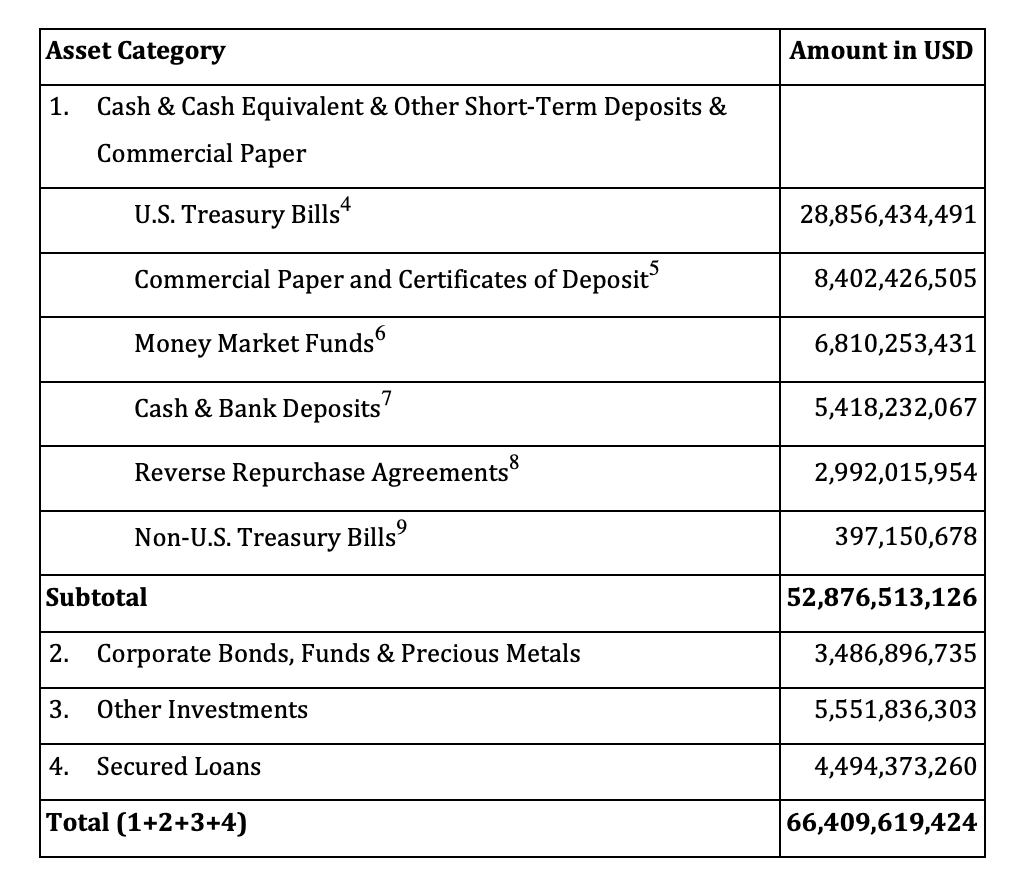
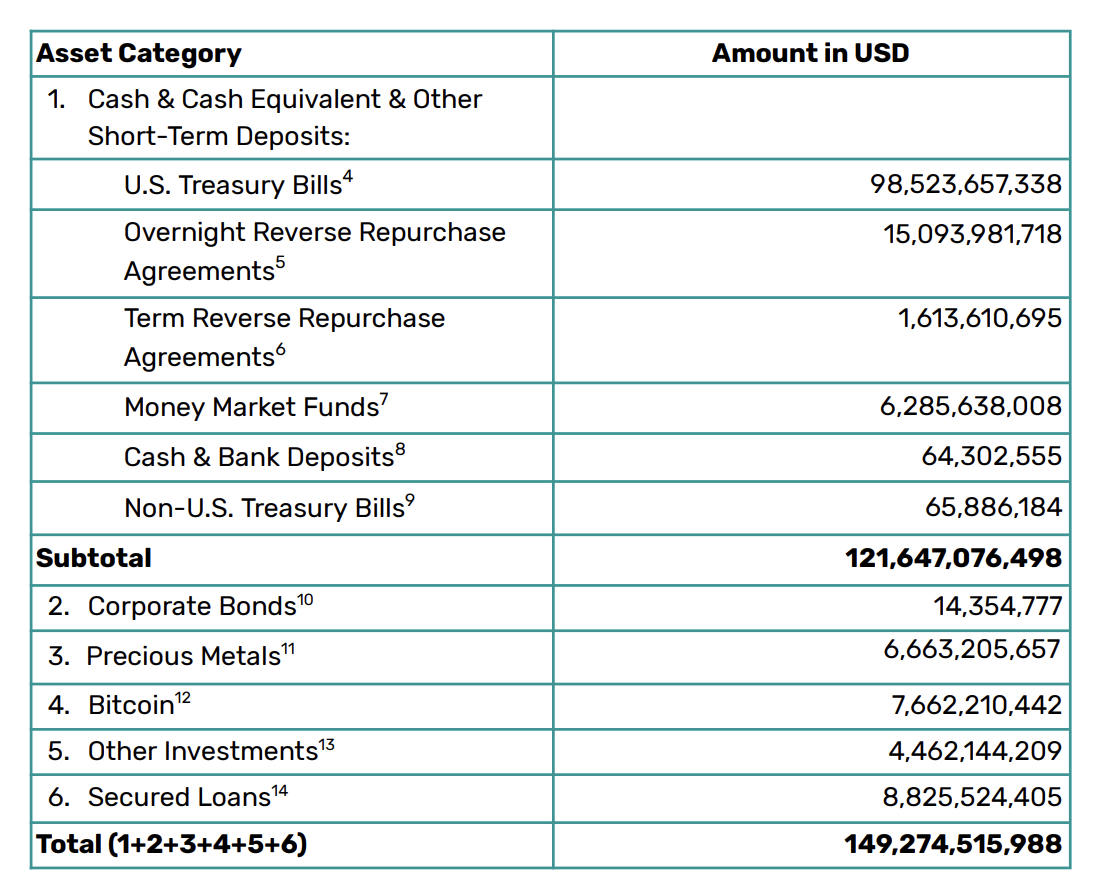
While I think the hysteria of a lack of 1:1 backing is somewhat tired and overly paranoid at this point, I do think it will be important to watch how Tether responds to this new regulatory regime. Ostensibly they'll have to offload all assets outside of those category 1 items to get in compliance, and provide even more robust transparency around their reserves going forward. If they prove unwilling to do this, it will be a profoundly negative signal and may threaten their position as the largest stablecoin issuer. And if they do comply, it will serve to even the playing field between them and Circle. In short, Tether is the most obvious loser in the face of GENIUS.
Shapeshifting Assets and Regulatory Flexibility
On a final note, I wanted to express my optimism at the pathway that is being carved out by CLARITY with respect to fluidity around asset category: allowing for tokens to begin as securities and eventually transition into commodities is exactly the right framework to properly regulate these assets (if they have to be regulated at all). It's true that ICOs and token sales functionally acted as equity offerings in many cases, and there were many parties that took advantage of this loophole. The great travesty would be to punish truly novel financial constructions (like BTC and ETH) for the sins of the lower common denominator. By dealing with digital assets with nuance, CLARITY is able to have its cake and eat it too. I have difficulty imagining a less-bad regulatory framework, and that's about as high a praise as I think is appropriate for regulation.