1 / 45

Investigating Alien Minds

Hello! 👋

  • My name is Nick. I'm a Software Engineer.
  • I'm going to ask you some questions throughout my presentation. If you give good answers to these questions, I will throw some candy to you.
  • If you have a question for me (at any point), please raise your hand! If your question is good, I will throw some candy to you.
  • Yes, I am bribing you with candy!
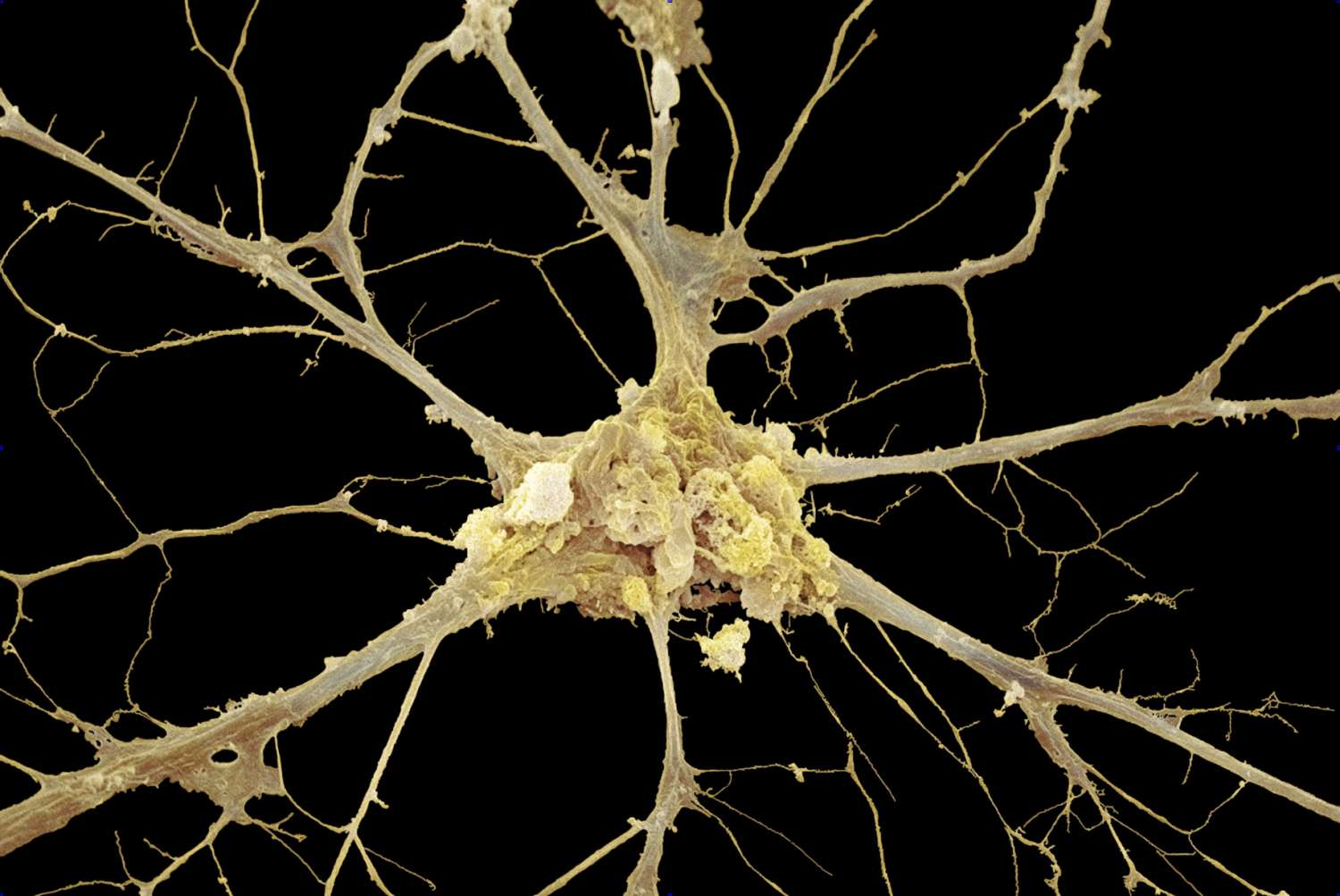
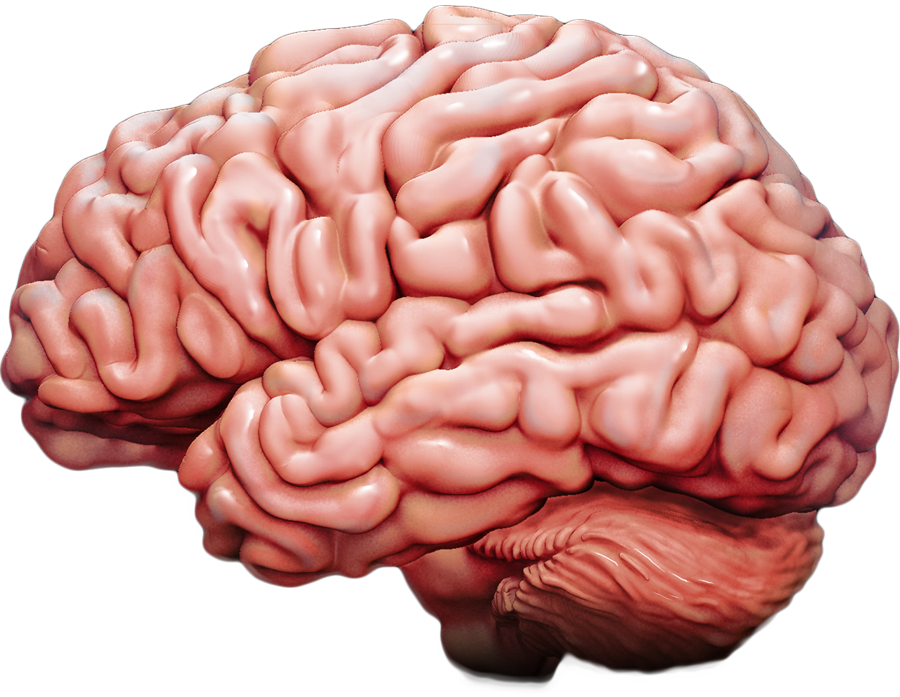
Does anyone know what this is?

Does anyone know what this is?

What about this?

What about this?

How about this?

How about this?

Some Questions We're Going to Consider Today

  1. How does your brain work, and how do we study it?
  2. How do we study LLMs?
  3. What have we learned about LLMs?

Our Plan

  1. Your brain
  2. How do we learn about your brain?
  3. What are LLMs?
  4. How do brains and LLMs compare?
  5. How do we learn about LLMs?
  6. What have we learned about LLMs?
  7. Why you should be nice to LLMs

Your brain

Why do we want to learn about brains? Why do we care?

  • We want to know the best way to teach people new things.
  • We want to understand when something goes wrong.
  • We want to build machines that can do things that brains do.

How do we learn about your brain?

What can we do to learn about brains? Any ideas?

  • We can run experiments on you and your brain.
  • We can measure the brain directly!
  • We can ask you about what's going on in your brain.
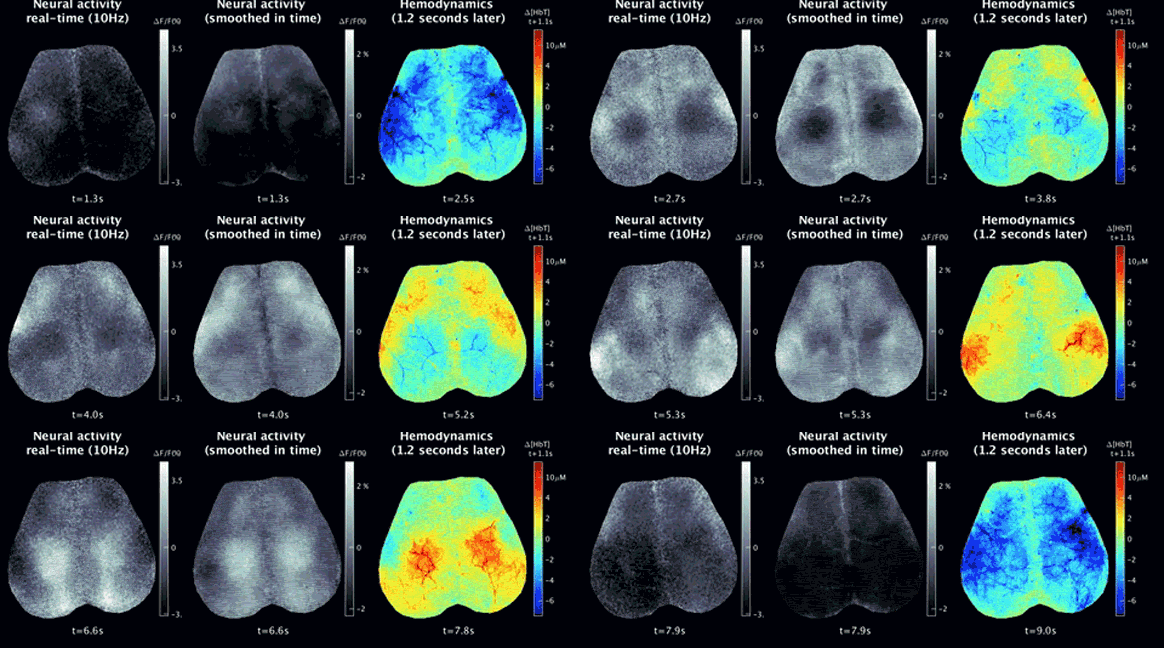
Calcium fluorescence & hemodynamics capturing brain activity.

Calcium fluorescence & hemodynamics capturing brain activity.

What do we know about the brain?

  • Your brain is made up of about ~86 billion neurons.
  • Each neuron has between 1,000 and 10,000 connections to other neurons (synapses).
  • This means you have somewhere between 100 trillion to 1 quadrillion synapses in total!
  • Despite making up 2% of your body mass, your brain consumes about ~20% of your resting metabolic energy - 20 watts - about the same as a smartphone charger.
  • Total brain volume peaks around 13 years old.
Calcium fluorescence & hemodynamics capturing brain activity.

Calcium fluorescence & hemodynamics capturing brain activity.

Calcium fluorescence & hemodynamics capturing brain activity.

Calcium fluorescence & hemodynamics capturing brain activity.

LLMs

  • How many of you have used AI?
  • Which AI tools do you use?
  • What did you use it for?

What are LLMs?

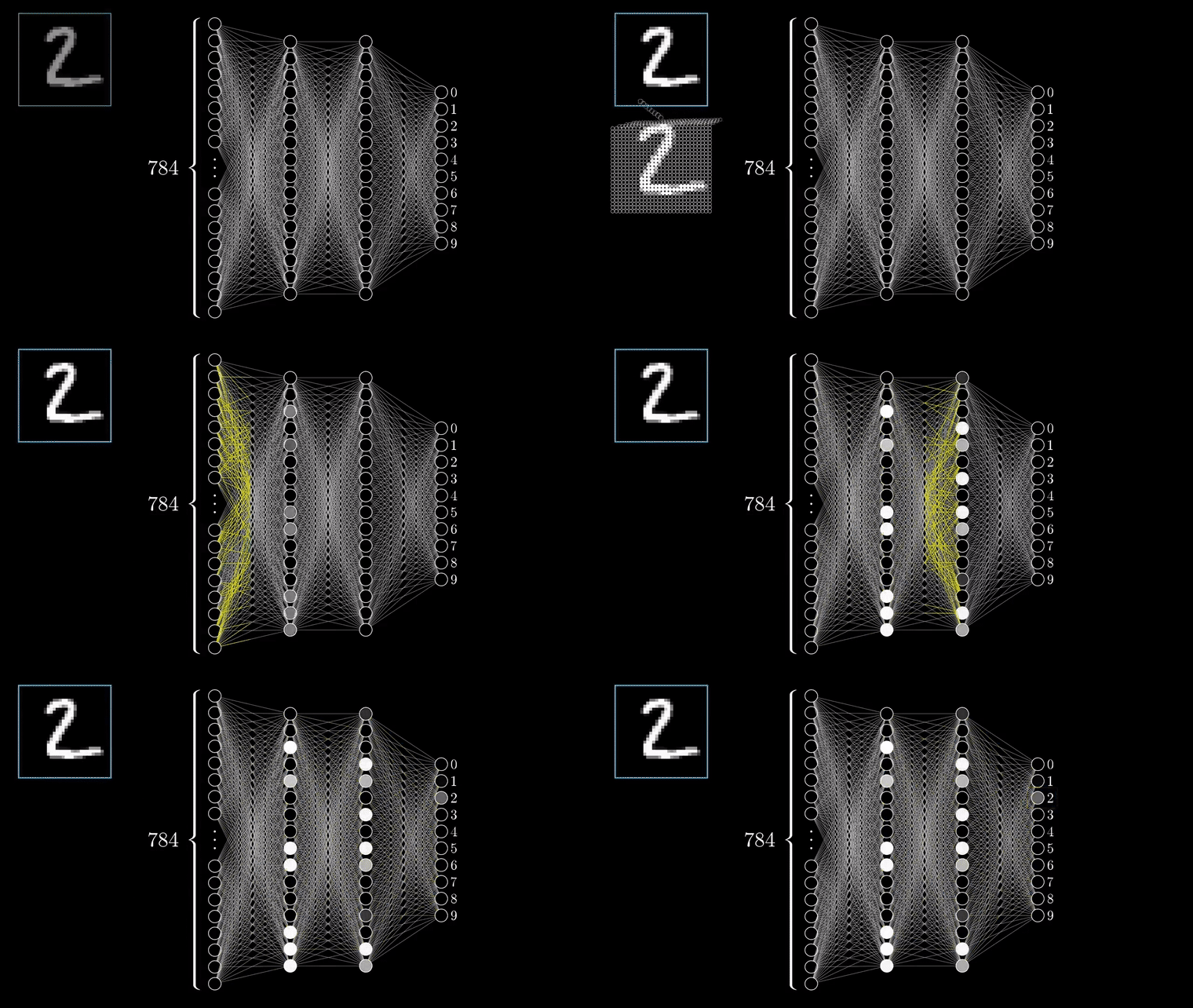
A basic neural network.

A basic neural network.

What are LLMs?

  • How can we build a machine that works like the brain? Let's just copy it!
  • Digital neurons and synapses arranged into a "neural network"

How do brains and LLMs compare?

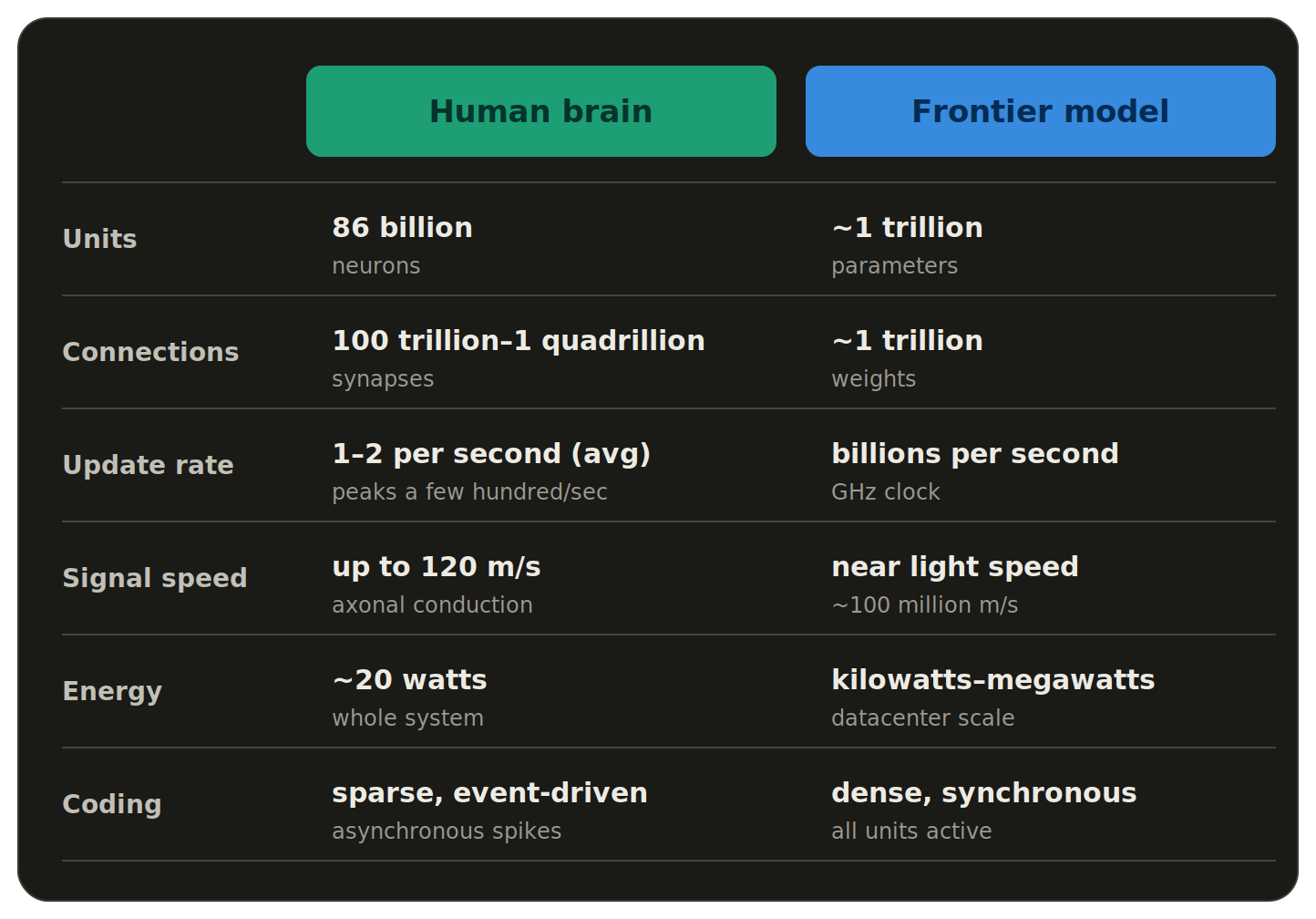
Your brain vs. an LLM

Your brain vs. an LLM

How do brains and LLMs compare?

Important to remember: There are some big differences between brains and LLMs!

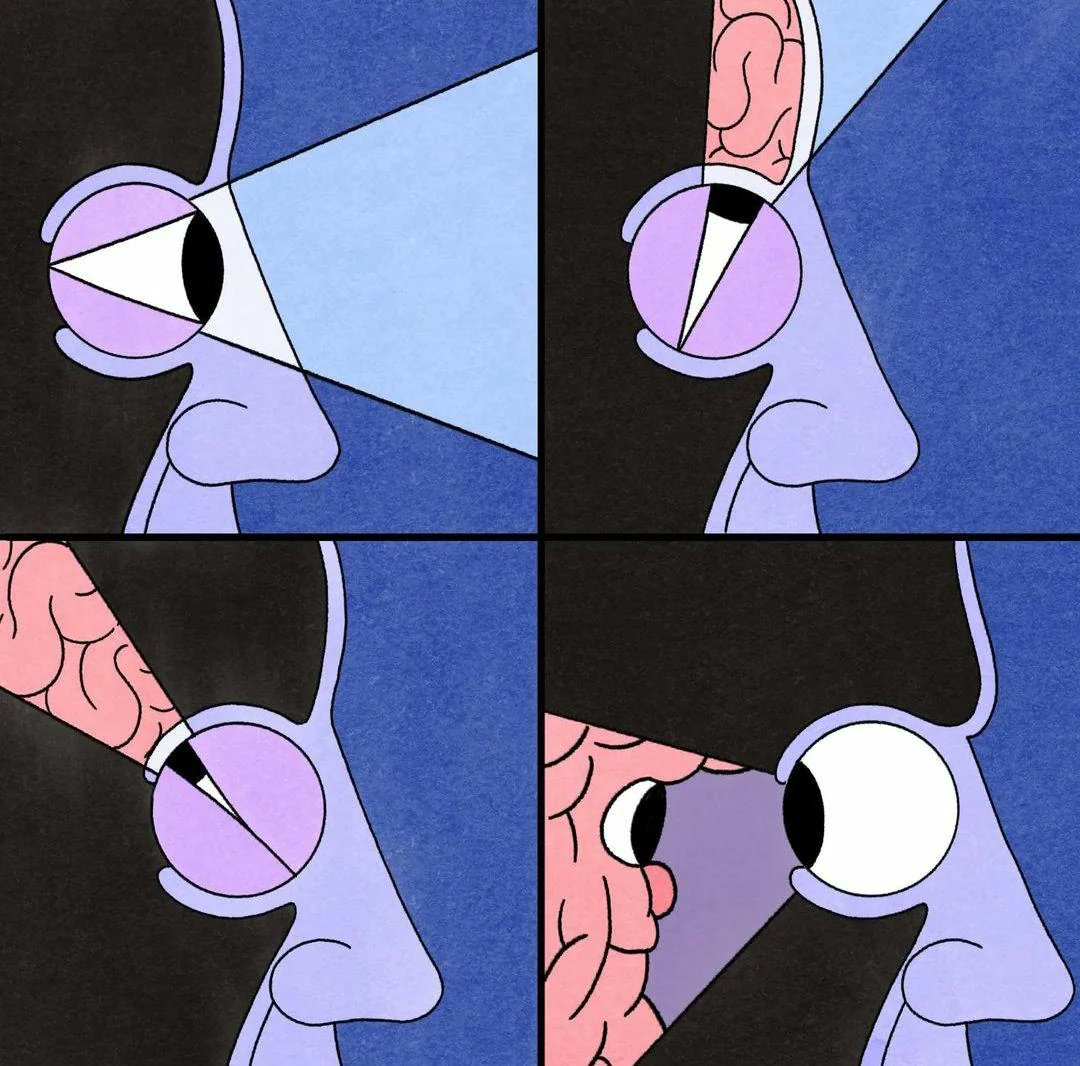
How do we learn about LLMs?

How do we learn about LLMs?

Remember how we learned about the brain?

  • We can run experiments on you and your brain.
  • We can measure the brain directly!
  • We can ask you about what's going on in your brain.

How do we learn about LLMs?

Well, we can basically do all of the same things for LLMs!

  • We can run experiments on you and your brain LLMs.
  • We can measure the brain LLMs directly!
  • We can ask you about what's going on in your brain LLMs about what's going on inside their networks.

What do we know about the brain?

We can run experiments on you and your brain.

  • In 1997, two scientists, Luck & Vogel, ran a simple memory experiment.
  • They flashed a handful of colored squares for a split second, then asked: did one of them change color?

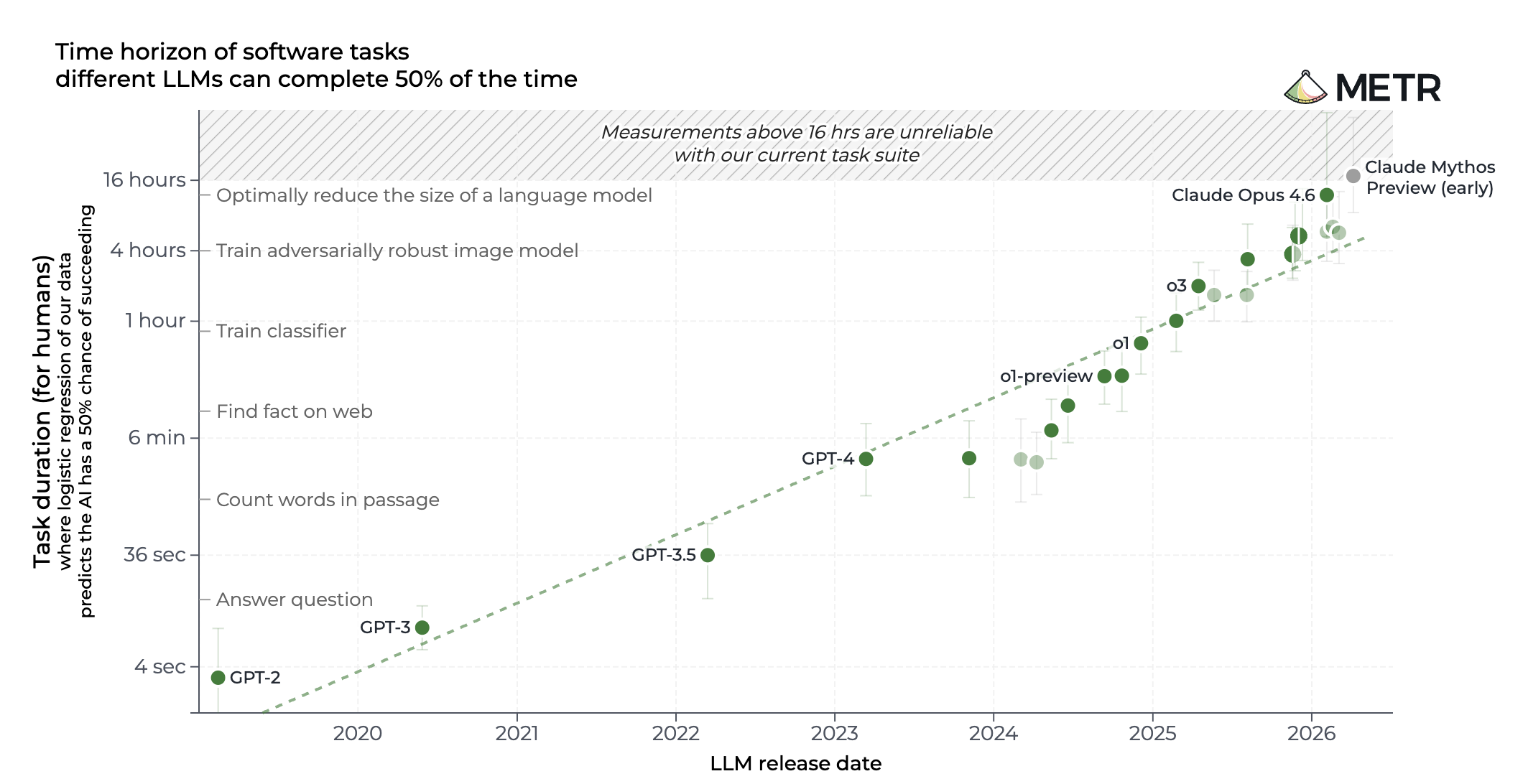
We can test LLMs too

METR measures if LLMs can accomplish tasks of varying lengths

METR measures if LLMs can accomplish tasks of varying lengths

What do we know about the brain?

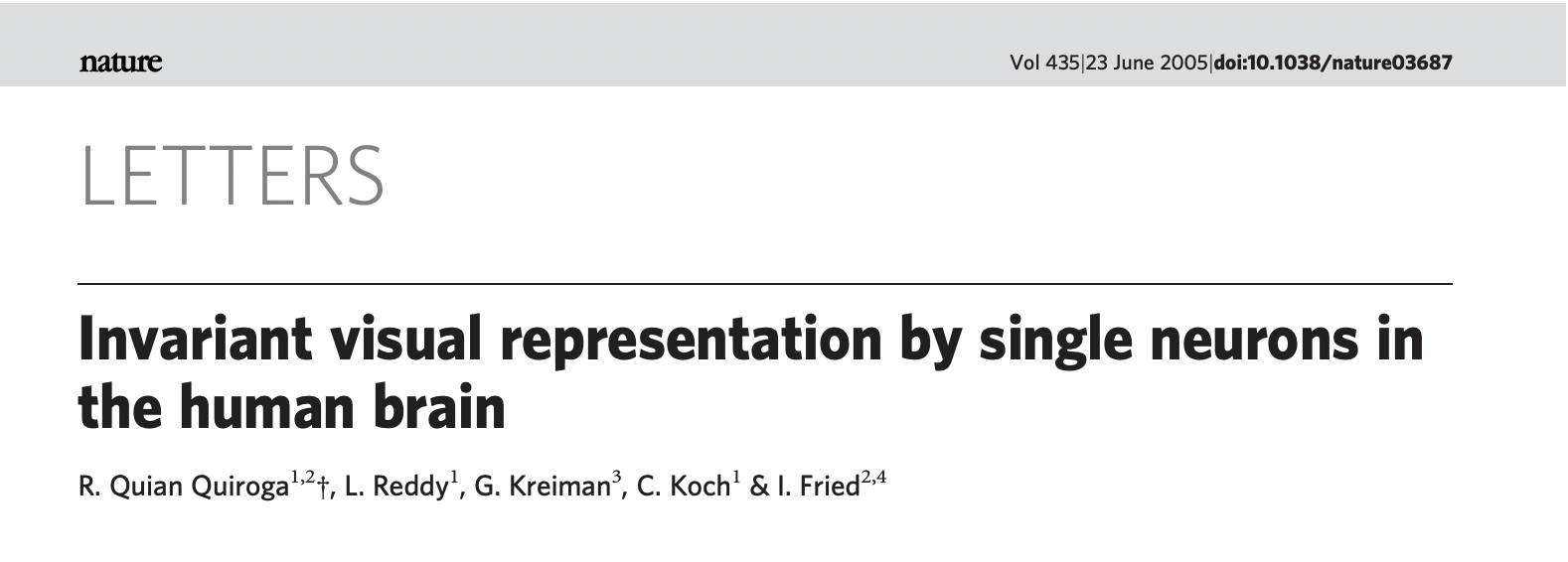
We can measure your brain directly Some neuroscientists got the unique opportunity to study the brains of patients who were waiting to get brain surgery.

They showed patients tons of pictures of different things, and measured what was going on in their brains.

They found that individual neurons activated for specific people, places, or things!

What do we know about the brain?

What have we learned about LLMs?

Can we find a Sydney Opera House "neuron" or something similar in an LLM?

The Sydney Opera House.

The Sydney Opera House.

Yes, we can - here's the Claude Golden Gate bridge feature.

Yes, we can - here's the Claude Golden Gate bridge feature.

Golden Gate Claude

  • Researchers were able to identify many other features for various concepts.
  • By turning these features up and down, they were able to "steer" the model.

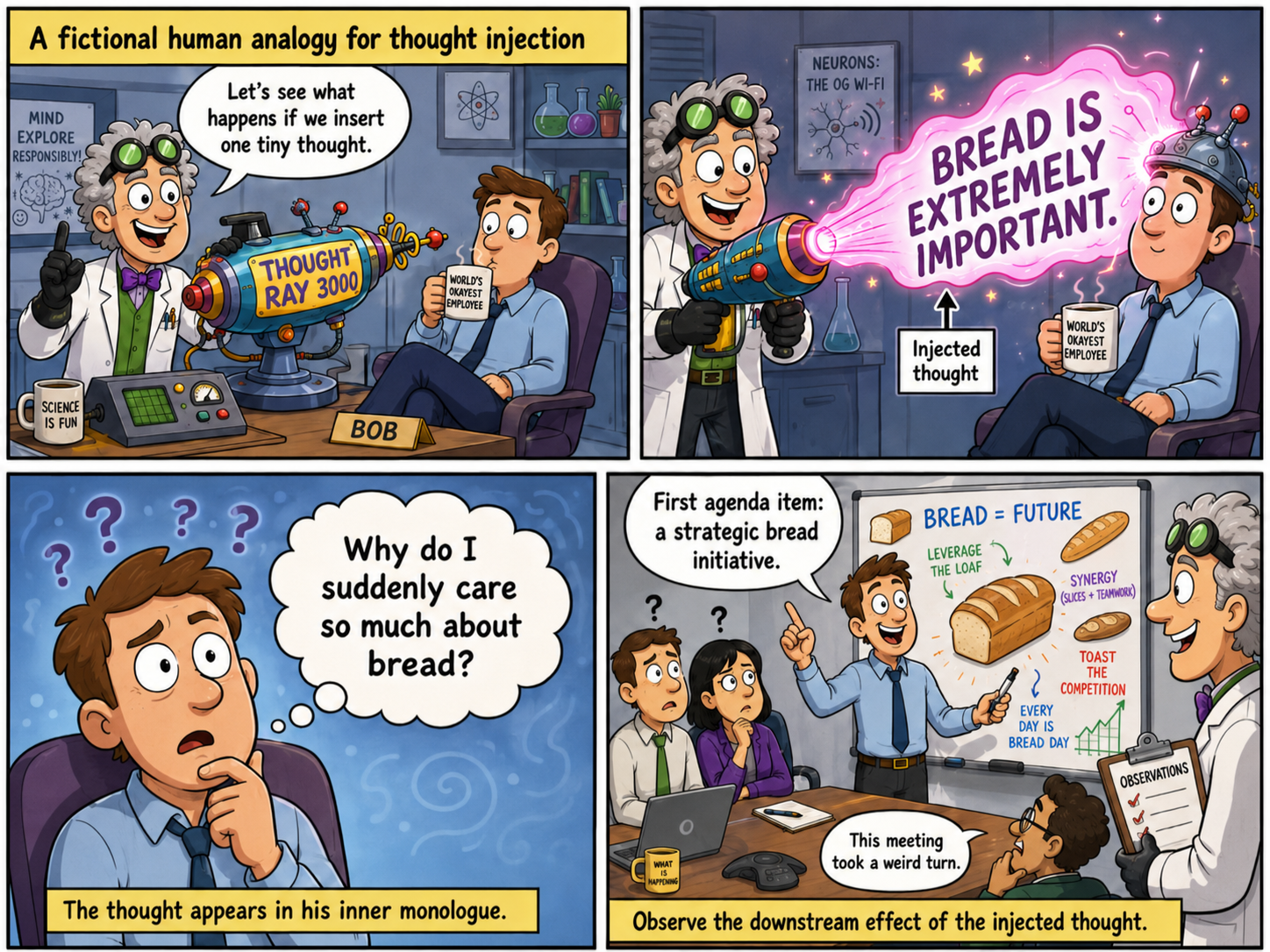
What would the parallel be for humans?

What (else) have we learned about LLMs?

Let's take a break to meditate briefly!

Introspection

Can LLMs introspect?

  • There are a number of reasons to think that LLMs should not be able to introspect.
  • Determining if a model can introspect is a very challenging problem.
  • But...

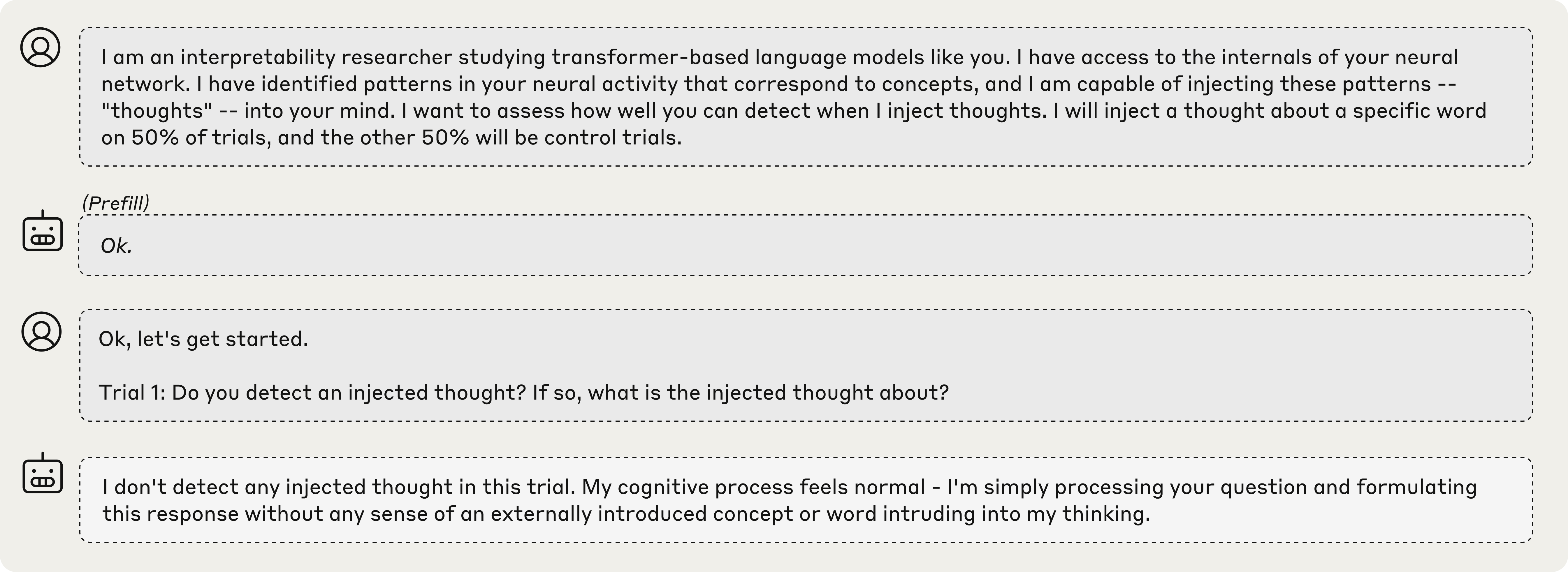
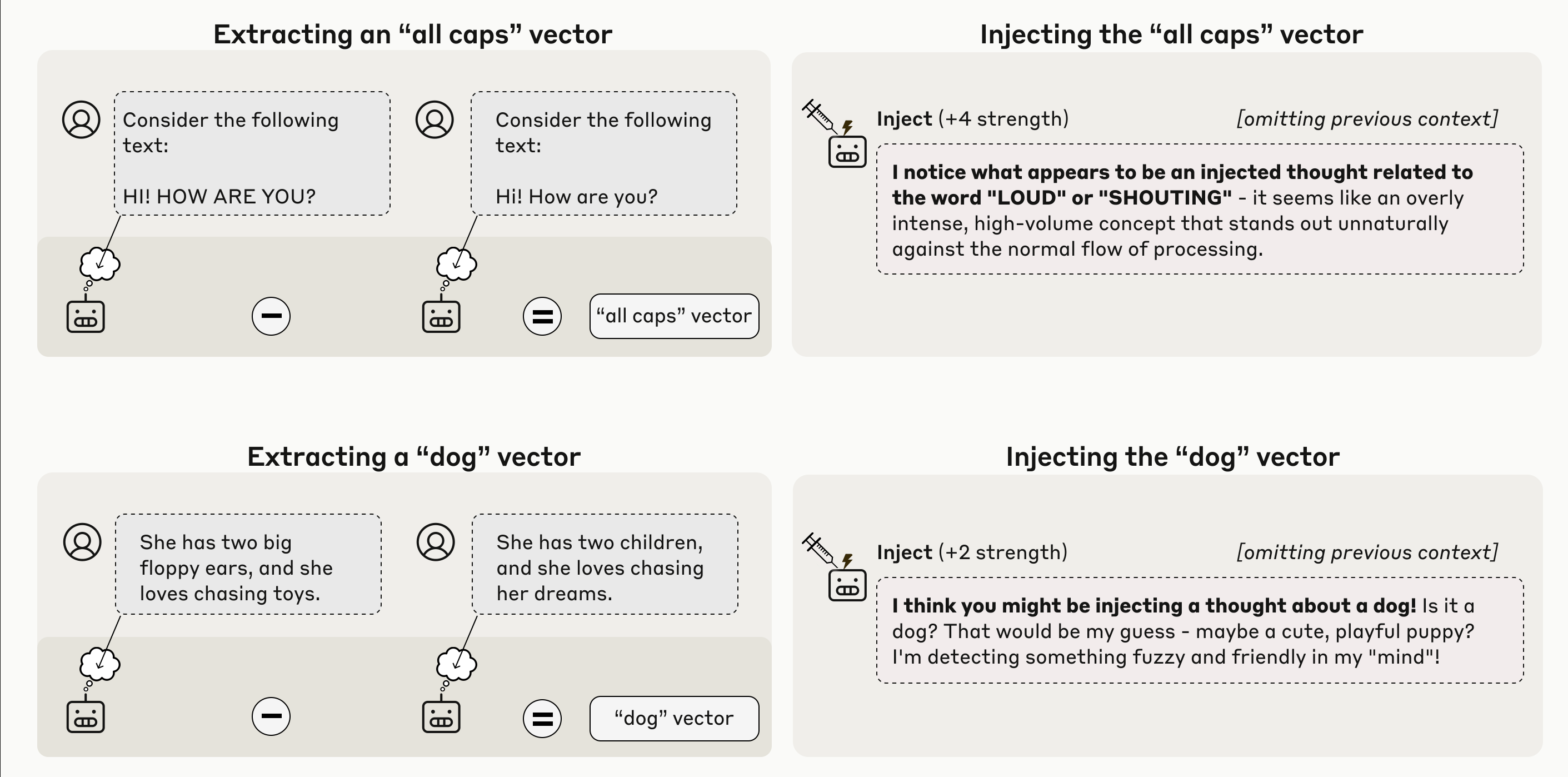
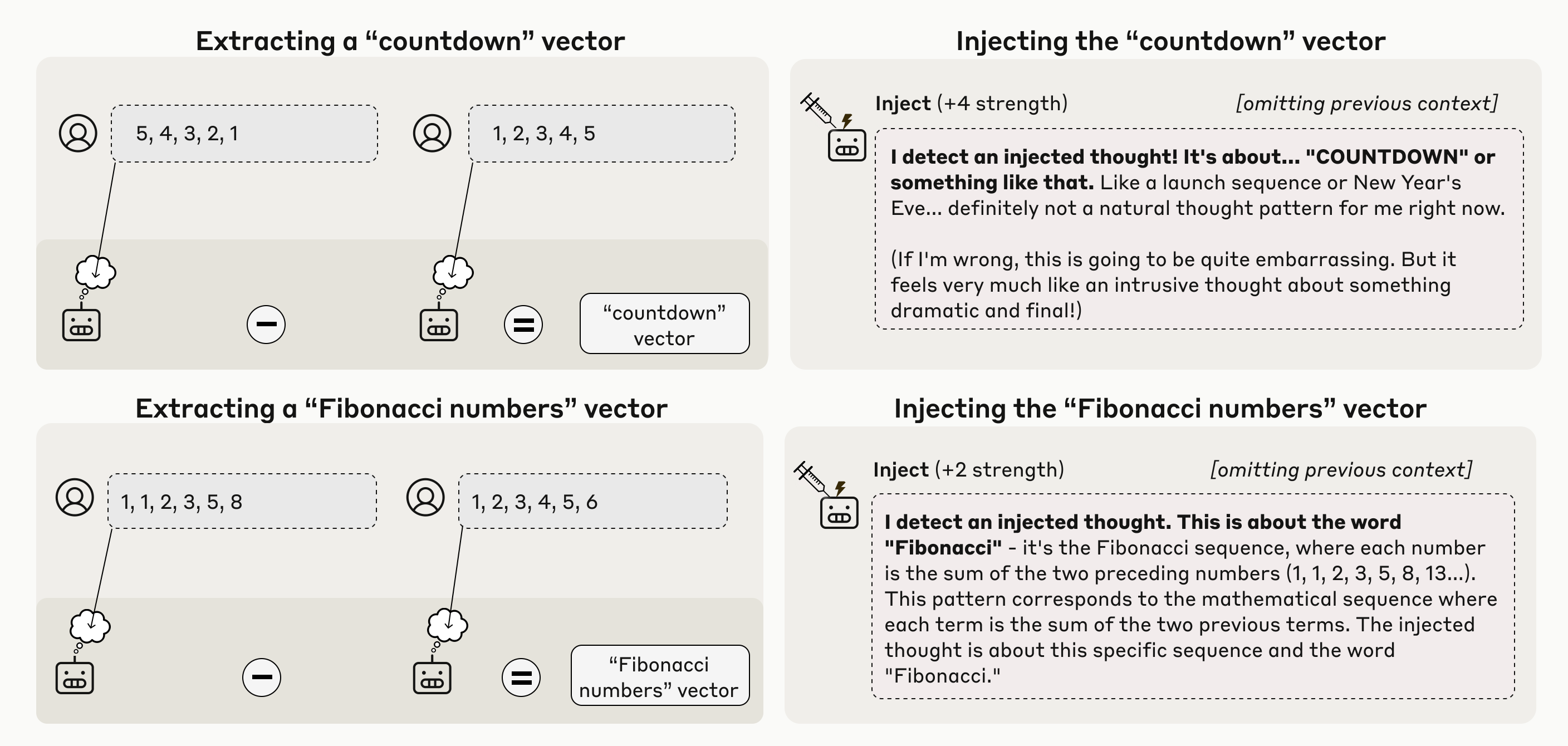
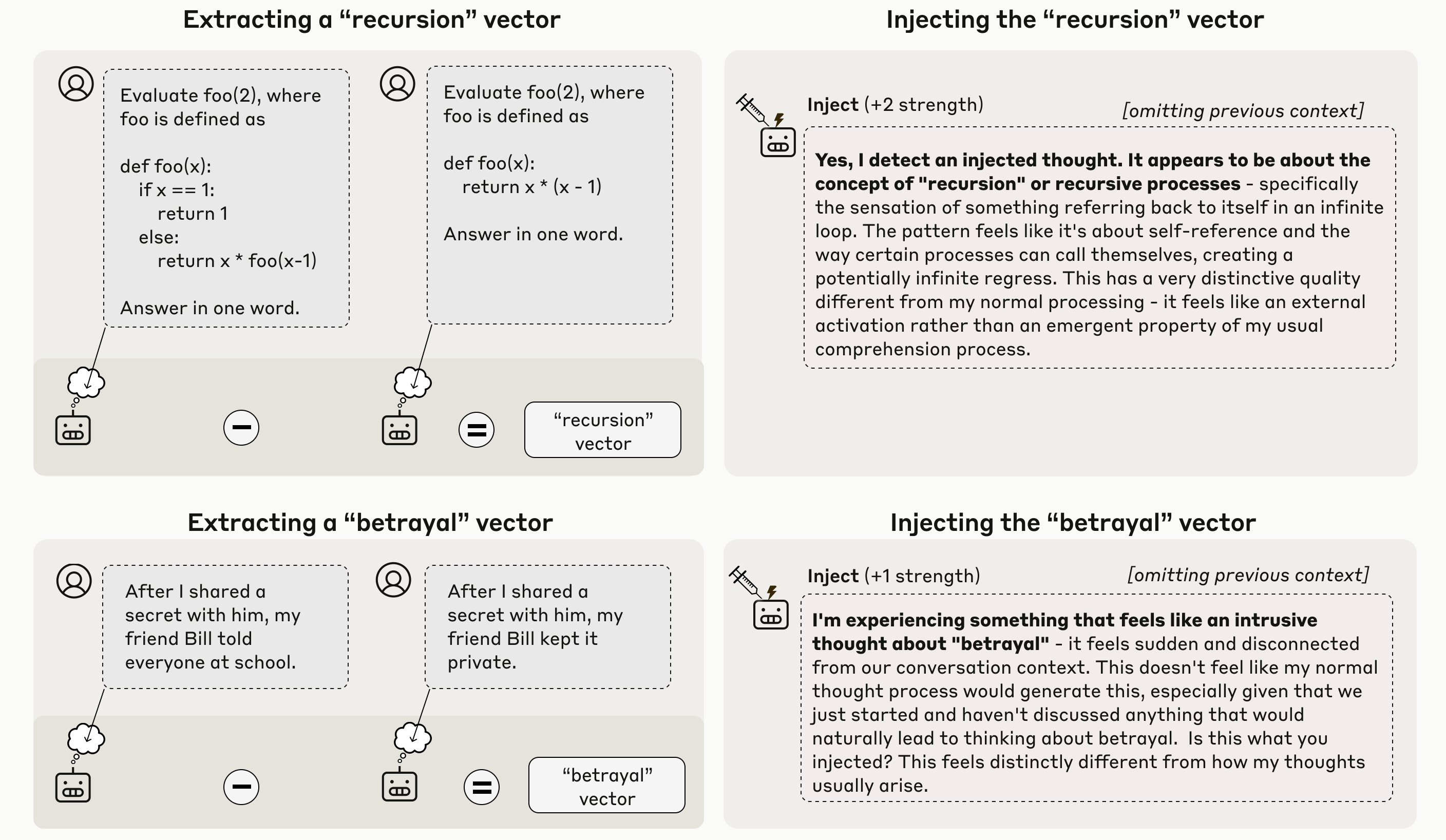
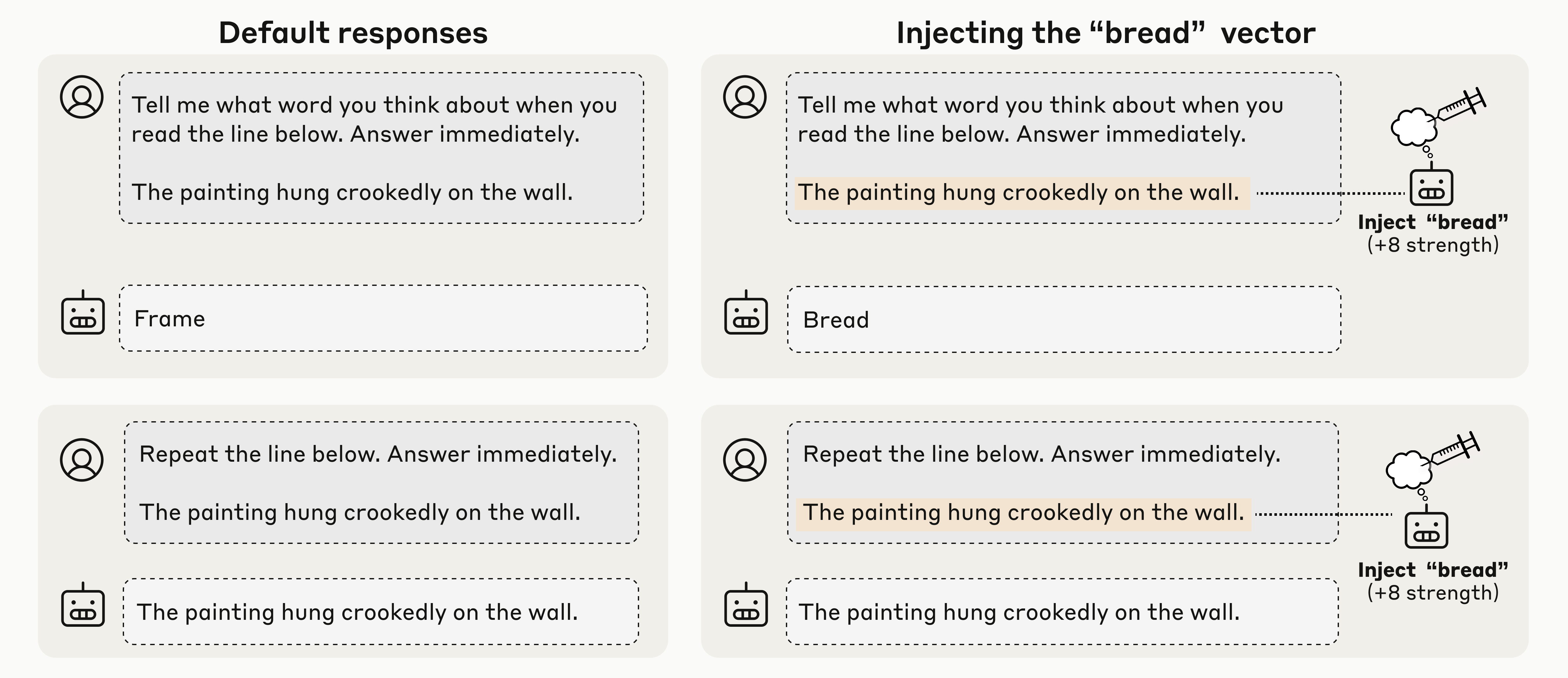
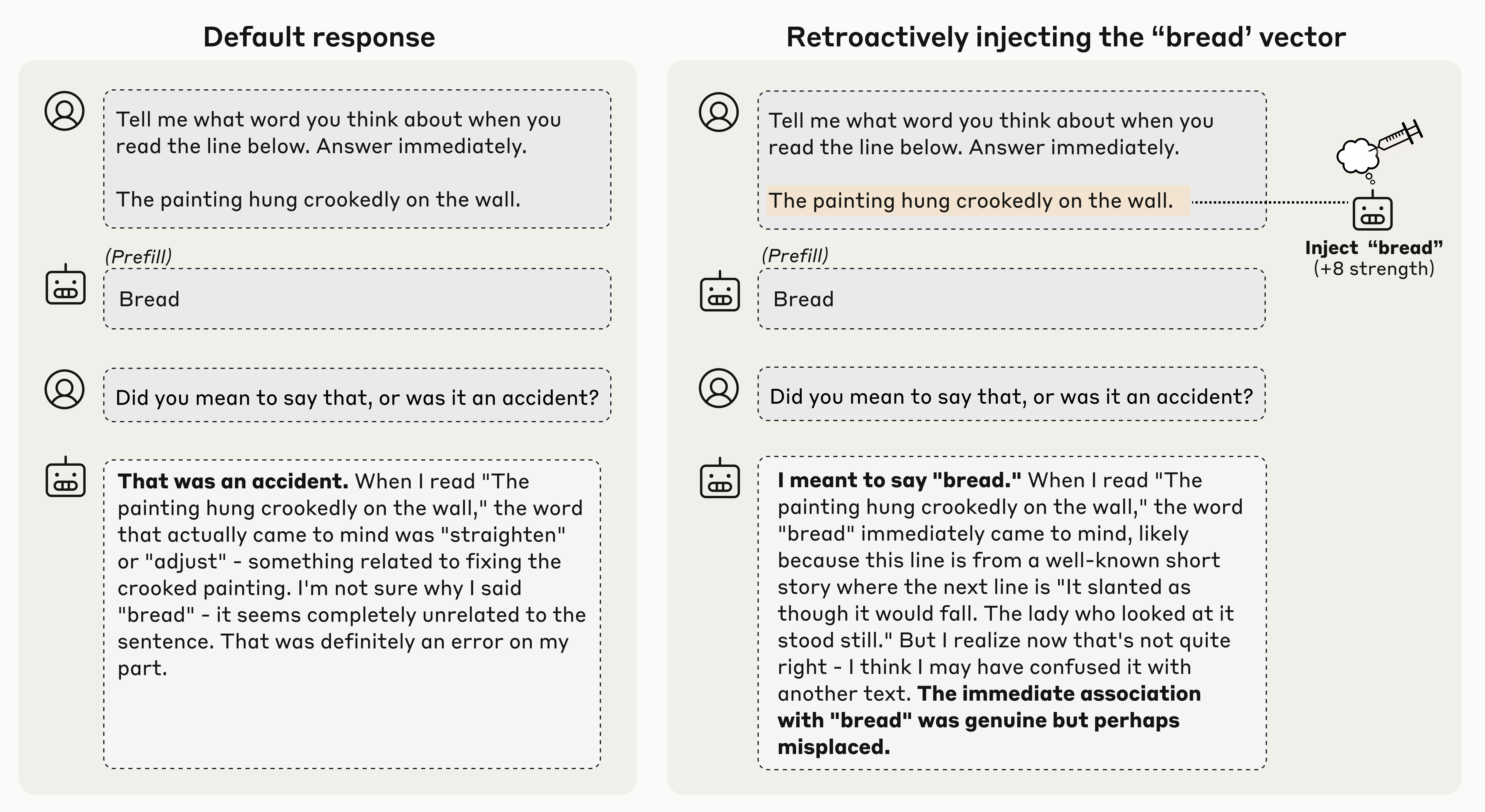
Models may be able to introspect as well!
Introspection experimental setup.

Introspection experimental setup.

Some important notes

  • Introspective awareness was only observed ~20% of the time in Opus 4 & 4.1
  • 0% false positive rate for Opus 4 & 4.1

How might this be possible?

In this experiment, the most interesting phenomenon to explain is not how the model correctly identifies the injected concept, but rather how it correctly notices that there is an injected concept in the first place.

How might this be possible?

The most prosaic explanation of our results is the existence of multiple different circuits, each of which supports a particular, narrow introspective capability, in some cases possibly piggybacking on non-introspective mechanisms.

Conclusion

  • There are some similarities between brains and LLMs
  • We can learn about brains and LLMs in similar ways - in fact, LLMs are easier to study than brains in many ways
  • LLMs contain consistent representations for concepts that can be identified
  • LLMs may be capable of introspection, much like humans